
The Changing Landscape of Prenatal Care

Prenatal care has always been about the partnership between provider and patient. But in today's digital world, that partnership extends far beyond the walls of your clinic or birth center. Your patients are already using their phones to research symptoms, track their cycles, and seek health information. The question isn't whether they'll use technology during pregnancy — it's whether the technology they use supports the care you provide.

The American College of Nurse-Midwives (ACNM) recognizes the role of technology in enhancing patient education and engagement. When midwives recommend a well-designed pregnancy tracking app, they help patients channel their natural curiosity into structured, evidence-based self-monitoring that complements clinical care.

Better Data Between Visits

Standard prenatal care involves visits every 4 weeks in the first and second trimesters, every 2 weeks from weeks 28-36, and weekly from 36 weeks until delivery. That's a lot of time between touchpoints — especially in the critical early months when patients have the most questions and concerns.

A pregnancy tracking app fills these gaps by encouraging daily or weekly self-monitoring. When patients log their symptoms using a comprehensive tracker with 41 categories, they create a detailed record that captures information that would otherwise be lost between visits. The Nesting Co. app's symptom tracker allows patients to record everything from nausea severity and headache frequency to sleep quality and mood changes — the kind of granular data that helps you identify trends and concerns early.

The growth tracker is equally valuable. When patients follow their baby's development week by week with visual milestones, they stay engaged and informed. This engagement translates to more productive appointments because patients arrive with questions and observations rather than vague concerns.

Supporting Patient Self-Advocacy

One of the core values of midwifery care is empowering patients to be active participants in their own health. Recommending a tracking app is a practical extension of this philosophy. When patients consistently monitor their symptoms, vitals, and baby's activity, they develop body literacy — an awareness of what's normal for them and what warrants attention.

This body literacy leads to earlier reporting of potential concerns. A patient who has been tracking her blood pressure at home and notices an upward trend is more likely to contact your office promptly than one who only has her blood pressure checked at appointments. ACOG recommends home blood pressure monitoring for patients at risk of preeclampsia, and a vitals tracking feature makes this process simple and organized.

Enhancing the Midwife-Patient Relationship

When you recommend a specific tool to your patients, you're communicating that you care about their experience between visits. This strengthens the therapeutic relationship that is central to midwifery care. Patients feel supported, informed, and connected to their pregnancy — even when they're not sitting in your office.

The ACNM Hallmarks of Midwifery emphasize individualized care, health promotion, and empowerment. A tracking app that includes educational content — like health and wellness guides, a prenatal vitamin plan, and a nesting checklist — directly supports these hallmarks by providing patients with the knowledge and tools they need to make informed decisions about their care.

Practical Integration Into Your Practice

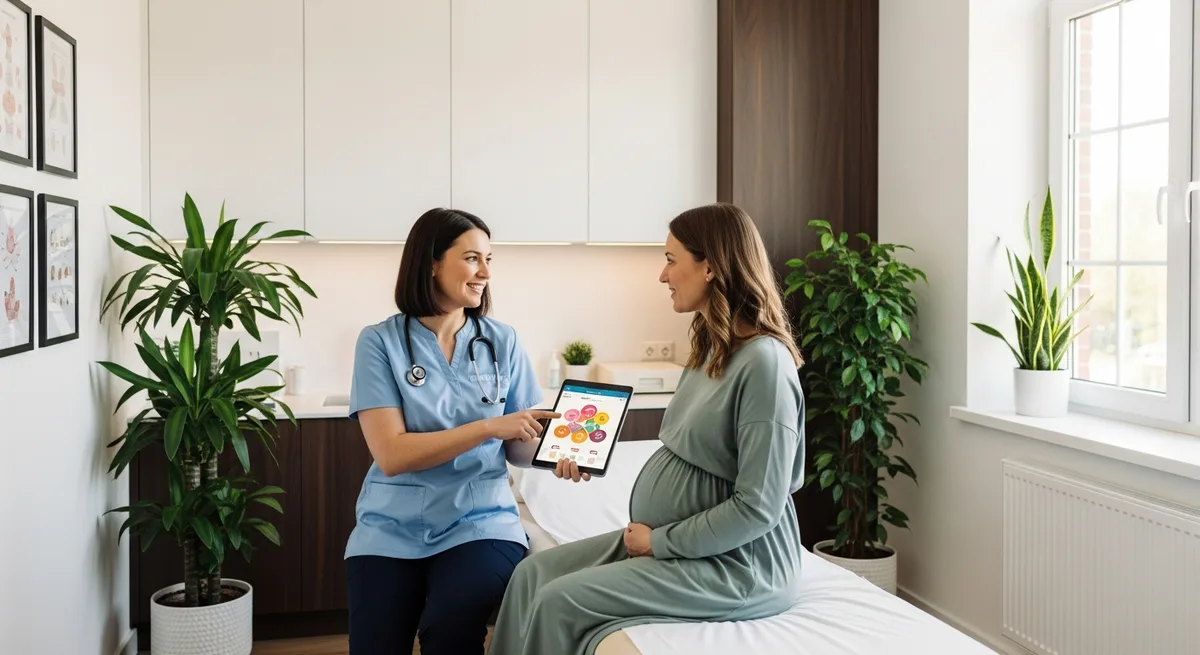
Integrating a pregnancy tracking app into your midwifery practice doesn't require a dramatic workflow change. Start by recommending it during the initial prenatal visit: "I suggest all my patients use the Nesting Co. app to track their symptoms and baby's growth between visits. It helps us make the most of our time together."

At each subsequent visit, ask about their tracking. Review any concerning symptoms they've logged, discuss baby's growth milestones, and use the data as a springboard for patient education. If they've been tracking their prenatal vitamin adherence, you can address gaps and discuss the importance of specific nutrients like folate, iron, and DHA.

Over time, you'll find that patients who track consistently come to appointments better prepared, ask more informed questions, and take more ownership of their prenatal care — all outcomes that align with the midwifery model of woman-centered, evidence-based care.

The Evidence for Patient Engagement

Research consistently shows that engaged patients have better health outcomes. A systematic review published in the Journal of Medical Internet Research found that mobile health interventions during pregnancy were associated with improved prenatal care attendance, better health behaviors, and higher patient satisfaction. The WHO recommends patient engagement as a key strategy for improving maternal health outcomes globally.

For midwives, patient engagement isn't just a strategy — it's a philosophy. By recommending tools that support daily engagement with pregnancy health, you're extending the midwifery model of care into the digital space. Your patients benefit from continuous support, and you benefit from richer data and more productive clinical encounters.